
Our Partners are some of the smartest, wittiest and most interesting people we know...and we're not just saying that. Check out what some of them have to say via their blogs.
The Total Maximum Daily Load (TMDL) program is a Clean Water Act program for identifying and restoring waters that do not meet water quality standards (impaired waters). According to U.S. EPA's online ATTAINS database, states report 56,391 river miles are impaired by flow alterations. Yet the same database lists exactly 0 TMDLs completed for flow alterations.
Public Citizen, a national nonprofit public interest organization, has compiled a policy brief with case studies on the conflicts between nuclear power production and water.
Pacific Institute has released a concise, three page analysis of the United States Geological Survey's latest assessment of water use in the United States.
The idea that water is the new carbon – a concept espoused on this blog not once, but twice – has taken on a new dimension. The Bonneville Environmental Foundation announced this past August that they have started world’s first water offset market, allowing businesses and individuals to offset their water use in the same fashion as one would offset their carbon emissions.
The global health care giant Abbott has reduced its annual water use by one billion gallons - or 37% - bringing the company remarkably close to meeting its water conservation goal of 40% nearly two years ahead of schedule.
The great website Circle of Blue reports that the Global Public Policy Network convened a meeting this week to discuss the critical intersections between water and climate change.
Sweeping new legislation in California underlines how drought and population growth can alter what have long been seen as hard and fast political lines.
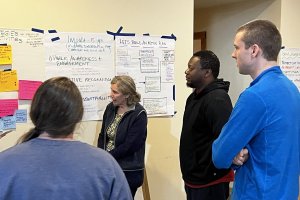
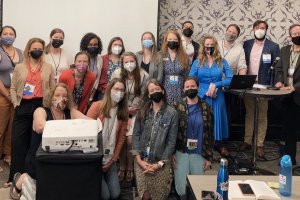
On October 26, 2009, over 50 water professionals, river activists, educators and utility representatives met at Portland State University for River Network's Saving Water, Saving Energy: Integrated Approaches to Addressing Climate Change and Protecting Rivers workshop. Participants gathered to learn about the connections between water, energy and climate change and network with their peers working on these issues.
A few weeks ago, the American Association for the Advancement of Science along with 17 of the country's most esteemed scientific bodies wrote a letter to the Senate describing the scientific consensus that human-caused greenhouse gas emissions are changing the climate.
Last week, a number of experts shared their research on the water-energy nexus in Copenhagen, Denmark for the International Water Association's Water & Energy 2009 conference.
The California Energy Commission recently won a court decision that will allow the state to set higher water efficiency standards for clothes washers. This is a great victory for water efficiency and the California standards should set the bar for a national mandate.
California received over $35 million in funding through the State Energy Efficient Appliance Rebate Program and decided to address their water and energy problems at the same time by targeting clothes washers with the highest rebates.
The Columbia Water Center is a great resource for information on all things water. Today they had a blog post with a nice and succinct description of what is meant by "the water-energy nexus."