
River Voices: August 2026
Welcome to the August 2026 edition of River Voices. This month, we’re highlighting the work of three organizations who are demonstrating how local leaders are already pursuing meaningful climate action in the Chesapeake Bay and along the Gulf Coast. Plus, results from the network AI survey and suggestions for building an internal AI policy at your organization.
Federal action on climate change is slowing down, but communities across the United States are working tirelessly to implement climate solutions at the local level. As a partner in those efforts, River Network is leveraging Tools for Equitable Climate Resilience, a toolkit that positions community-led research and leadership as key strategies for advancing local resilience efforts.
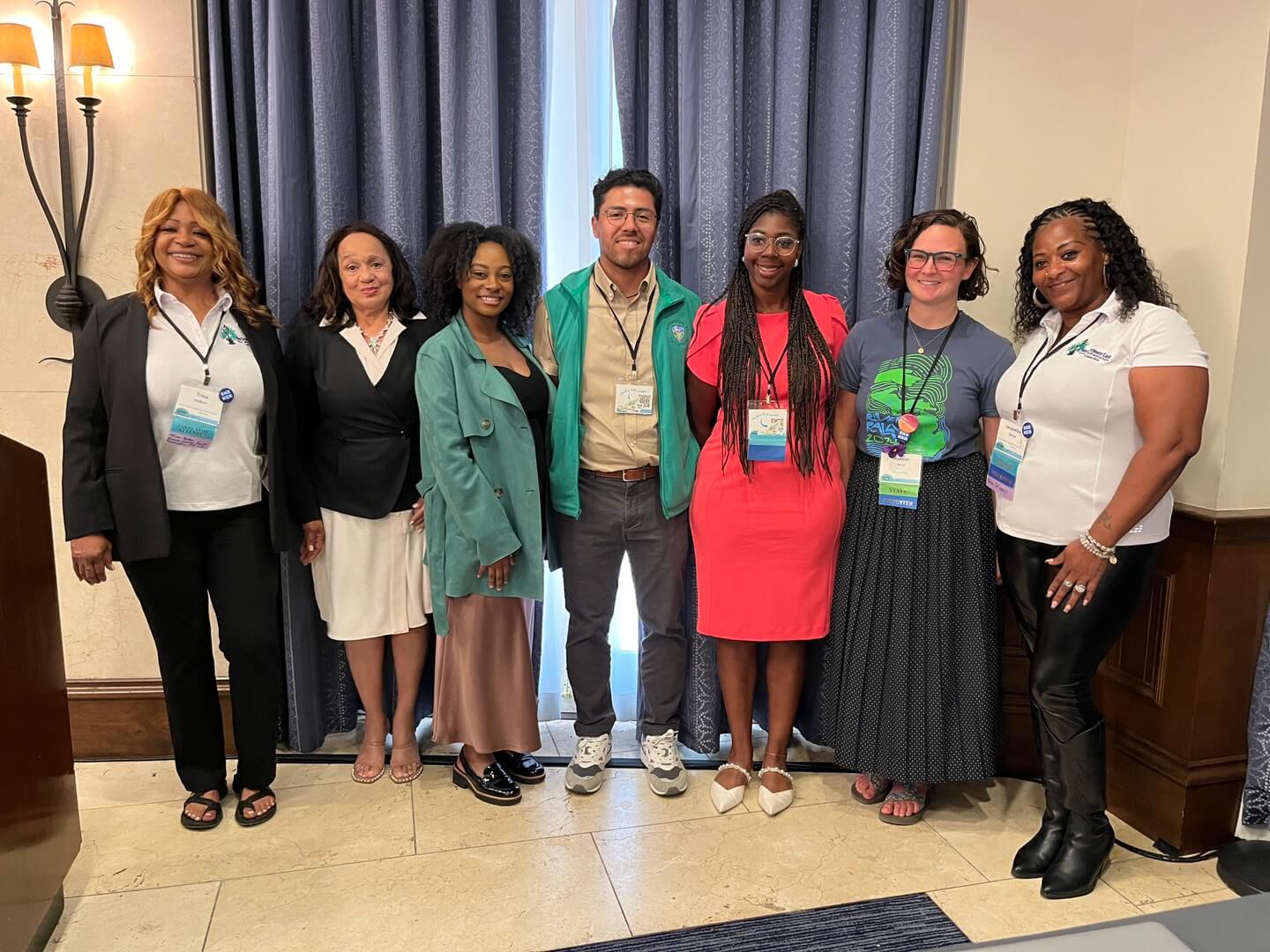
In the last six years, we have partnered with 34 organizations to launch programs that build local climate leadership. At River Rally 2026 in San Antonio, Texas, we brought 3 partner organizations together to demonstrate how local leaders are already pursuing meaningful climate action in the Chesapeake Bay and along the Gulf Coast.
“Solutions are often created without community voice; but GPE invests in local leaders to shift who holds power in climate solutions, and builds community-rooted leadership—not outside intervention.”
Lydia Williams, a cohort Fellow of Girl + Environment (GPE)

To build an internal AI use policy at your organization, it is first necessary to understand how your colleagues are using these tools. Network members had a lot to say about the pros and cons of AI adoption at water organizations.
66% of respondents reported no internal AI policy at their organizations.
Learn how other network members have developed their internal AI policies.
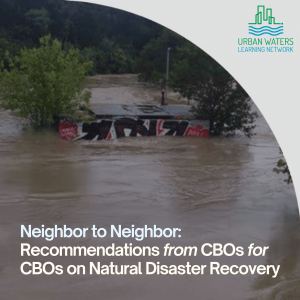
When a natural disaster strikes, like floods, droughts, storms, and earthquakes, community-based organizations (CBOs) are often the first to respond. That’s because they’re already there – present before the disaster and long after the news cycle moves on.
This guide shows how water-focused CBOs can support their communities before, during, and after a disaster strikes.
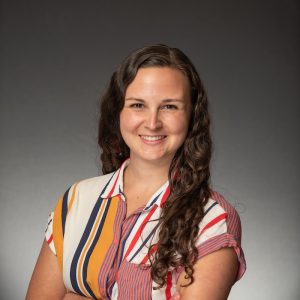
“‘Working’ in water, whether it’s paid work or not, is an obligatory part of my existence. In words I am graciously borrowing, ‘water is a relative,’ and raised me with intention. Being called to work in water is an iteration of being in relationship with water over the course of my life.”
Hannah Mico, author of our August feature piece, is River Network’s Resilient Communities Manager.
State Policy Showcase: Pressing “Pause” on the Data Center Boom
September 10 at 1p ET/10a PT
This special edition Showcase will be 90-minutes and feature speakers doing work in four different states: Illinois, Louisiana, Minnesota, and New York. Learn about the varied efforts across the nation to generate momentum around “pausing” the data center boom, creating effective policies to protect people and the environment, and highlighting the importance of working with state legislators on this hot-button topic.
Public Charities Can Lobby: How Your 501(c)(3) Can Influence Policy for the Greater Good
August 18 at 12p ET/9a PT
Freshwater Future’s partner, Alliance for Justice, will lead our next monthly session focused on nonprofit lobbying “Do’s and Don’ts”. After this workshop, you will have a clear understanding of what advocacy activities your 501(c)(3) can engage in, what communications count as lobbying, and how to maximize your non-lobbying advocacy.
September 24-25 in Detroit, Michigan
Registration is open for the conference hosted by the Healing Our Waters Coalition. Learn more about the conference and get registered. There are scholarships available for those who would benefit from financial assistance.
[Recorded] AI Knowledge Hub Training Series from Climate Advocacy Lab
The use of AI is a contentious topic in the climate movement. Some of us are deeply concerned about the climate, water, and labor impacts of this growing technology. Some of us are excited about the opportunities to do more good work with our limited resources. Most of us are somewhere in the middle.
What We’re Reading
- 📰 Milwaukee fast tracks projects after historic 1,000-year flood from Milwaukee Journal Sentinel
- 🎧 A Fisherwoman’s Fight for Environmental Justice: In this episode of Equity in Every Drop, host Thomas Hynes sits down with the legendary Diane Wilson—a fourth-generation fisherwoman, author, San Antonio Bay Estuarine Waterkeeper, and winner of the prestigious 2023 Goldman Environmental Prize.
- 📧 Federal Water Tap by Circle of Blue is a weekly digest spotting trends in U.S. government water policy. Get it delivered to your inbox every Monday.
- ⚕️ Why heat is so deadly and how to stay safe, a guide from Grist.