River Voices: February 2026
Welcome to the February 2026 edition of River Voices. This month we’re excited to share a new resource, Keep the Water Flowing: Best Practices for Avoiding Water Shutoffs. Also, the scholarship application and award nomination form for River Rally are now open.

River Network envisions a future where everyone can afford to pay for the clean, safe, and reliable water coming out of their taps, where no one’s water is shutoff because of their inability to pay, where communities have adequate resources for water infrastructure maintenance, and where drinking water contaminants do not threaten public health.
Our new resource, Keep the Water Flowing: Best Practices for Avoiding Water Shutoffs, includes background information on the problem of water affordability concerns and how the practice of water shutoffs harms households and communities. It also highlights concrete examples of how advocates have addressed these harms:
- Three case studies of water utilities and community groups tackling affordability issues with empathetic and innovative programs and policies
- Ten tangible ways we can reduce the use of water shutoffs at the local level
- State and federal policy examples and recommendations to tackle water shutoffs and affordability crises
You can take in this information in two ways:
- The StoryMap version is more interactive, relies on visuals, and aims to break the information down into digestible sections
- The standard PDF version is great for sharing with fellow practitioners and decisionmakers
We created this resource so that community groups and utility leaders can feel equipped with the knowledge, capacity, and confidence to advocate and implement best practices to reduce or eliminate the use of water shutoffs.
Stay tuned for details on upcoming learning sessions building upon these best practices for avoiding water shutoffs.

In Lane County, Oregon, grassroots organizers have worked tirelessly to get a measure on the ballot to establish a Watersheds Bill of Rights, which will be voted on in May 2026. Rob Dickinson, a member of the Protect Lane County Watersheds Steering Committee and Campaign, and Michelle Holman, one of the chief petitioners of the Lane County Watersheds Bill of Rights Initiative, share their insights on how to organize for future generations and for flourishing waterways.
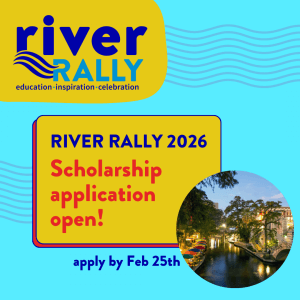
The scholarship application and award nomination form for River Rally are open. You can apply for a scholarship or nominate someone (including yourself) for an award until February 25, 2026. General registration will open next week. As we allocate scholarship funds, River Network team members will notify recipients of their award amount and confirm their ability to attend.
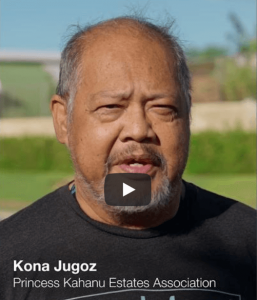
Kingdom Pathway received a Rooting Resilience grant through River Network for their Ho‘oulu Lāhui project in Waianae, Hawaii. They recently hosted the Princess Kahanu Legacy Tree Planting event at Princess Kahanu Estates. They worked with community members to plant ʻulu (breadfruit) and kukui trees and led a hands-on ʻulu cooking demonstration with the Native Hawaiian community, reinforcing food security, cultural practice, and long-term stewardship.
Join a Training Series in Our Online Learning Platform
Our Online Learning Platform offers entirely self-paced trainings to help grow and strengthen network members. Current topics include equitable development, building trust with water utilities, the Clean Water Act, State Revolving Funds, and more.
Advancing Nature-Based Solutions Through Economic Valuation
February 25 and March 18
This interactive two-part workshop series—hosted by Earth Economics, River Network, and the Urban Waters Learning Network—explores how ecological economics can strengthen advocacy for watershed restoration.
Register for Session 1: Integrating Ecological Economics into Watershed Restoration Projects
Register for Session 2: Communicating the Real Value of Nature-Based Solutions
Funding Opportunity: Local Data for Equitable Communities
Apply by March 3
Nonprofit organizations can apply for a grant to collect, analyze, and use data to address inequities in the physical, economic, and social conditions of a place. This open call for proposals from the Robert Wood Johnson Foundation expects to award up to 30 grants of $50,000 each. (Tip: this could be a great opportunity to put River Network’s Community Led Research resources into action!)
Managing Stormwater in Small Communities
March 5
This WaterNow Alliance webinar will explore how intermunicipal collaborations can enable communities to leverage their resources, meet regulatory requirements, and unlock new funding and financing to pursue shared stormwater management goals.
Communications Learning Sessions: Storytelling and Marketing
Online recaps
Did you miss any sessions of our recent learning series on communications strategy for nonprofit organizations? You can watch recaps of each below!
Telling More Memorable Stories
What We’re Reading
- 🖥️ Campaign: Say Yes to Michigan & Say NO to Data Centers! (Title Track)
- 🇨🇱 Thirsty Data and the Lone Star State: The Impact of Data Center Growth on Texas’ Water Supply (Houston Advanced Research Center)
- 🏜️ Can you build data centers in a desert without draining the water supply? Utah is finding out. (Grist)
- ⛑️ FEMA funding tied up in Senate immigration fight (Politico)
- ☀️ Despite federal backsliding, US states and municipalities are still planning for climate resilience (Brookings Institute)