

Managing Floodplains to Improve Community Vitality, Build Resilience, and Mitigate Risk
This blog is based on information delivered during a River Rally 2026 session presented by Lacey Davis (American Rivers), Eileen Shader (American Rivers), Justin Kozac (American Rivers), and Brian Murphy (River Network.)
Across the western United States, more communities are struggling to manage their watersheds and river corridors due to reduced river flows, elevated risk of floods due to increased development, more frequent forest fires, and climate uncertainty. The decisions that local governments and community-based organizations (CBOs) are making today about how river corridors are managed will largely determine how resilient these corridors will be to the growing threats of increased urbanization, prolonged drought, declining runoff, and catastrophic fire and flooding.
Additionally, historic river policies, land use practices, and natural resource management decisions that began as early as the 17th century also continue to affect river health. From beaver trapping to controlling rivers with hard infrastructure like dams, levees, and berms; most river corridors in the Western United States bear little resemblance to their original conditions. While efforts to control river corridors provided social benefits like water storage and flood protection, they also had unintended consequences on communities and environmental health, including pushing flood risk downstream, destroying key habitats, disconnecting rivers from their historic floodplains, and blocking fish passage.
With threats on the rise, developing a shared vision for our river corridors is more critical than ever. However, while community-based planning is a cornerstone of watershed and river health, there is a lack of technical capacity within local CBOs to execute these approaches. Furthermore, a lack of knowledge-sharing and collaboration between CBOs and local governments limits holistic river management and incentives to cultivate champions who can lead these management efforts.
The River Rally session titled: “Managing Floodplains to Improve Community Vitality, Build Resilience, and Mitigate Risk” looked for solutions to these threats and challenges, highlighting the need to unite diverse interests to create an integrated approach to managing our river corridors. The session was moderated by American Rivers Associate Director of Floodplain Restoration, Lacey Davis. Panelists included American River’s Senior Director of Floodplain Management, Eileen Shader; River Network’s Healthy River Program Specialist, Brian Murphy; and the Nature Conservancy’s Nature-Based Solutions Project Manager, Justin Kozak.
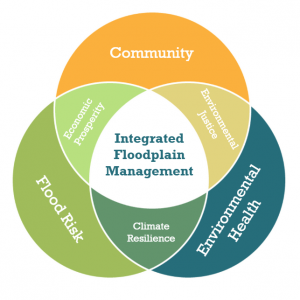
The session showcased real-world examples of integrated floodplain management and shared tools for assessing hazards and identifying multi-benefit opportunities. In particular, panelists provided examples of nature-based solutions such as levee setbacks, floodplain reconnection, and riparian revegetation to promote river resilience. This floodplain-based body of work is guided through integrated floodplain management (IFM), an approach that supports local government and CBO leaders working to ensure their communities and rivers are healthy and resilient into the future.
Eileen’s presentation highlighted American River’s 50 state floodplain strategy, which includes auditing of IFM enabling conditions (Step 1, complete) and launching state IFM campaigns (Step 2, ongoing) to encourage integrated floodplain management at the state and local level. American Rivers’ strategy has led to a national IFM playbook and learning initiative that provides an online library of state floodplain audit data, playbook of model state floodplain policies, and floodplain leadership initiative (webinars, workshops, etc.).
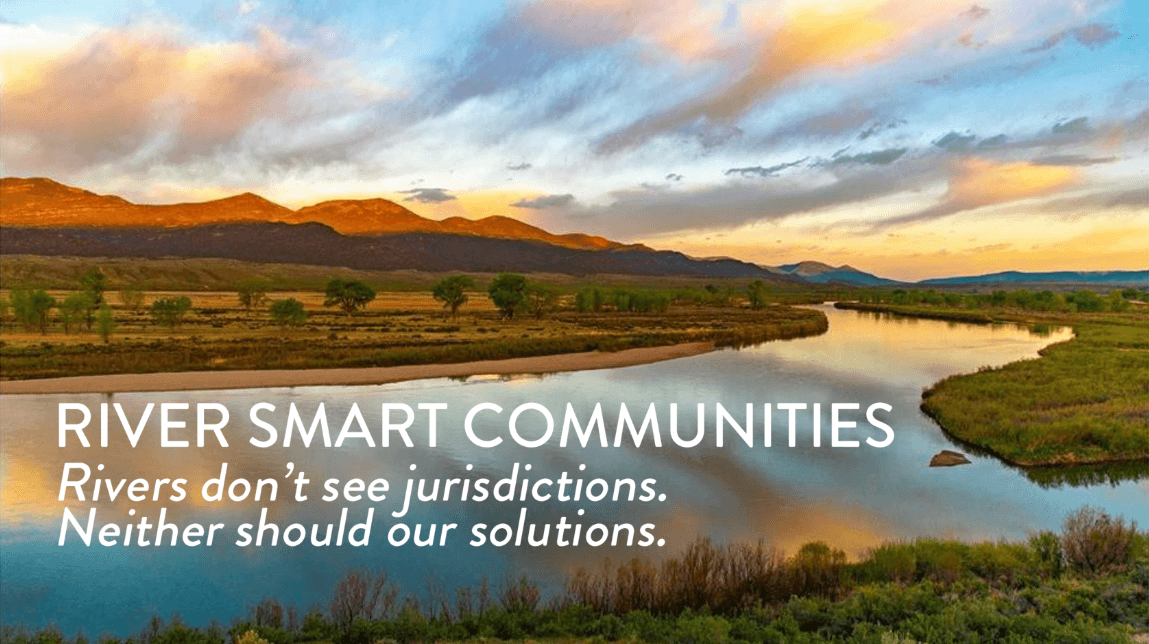
I presented an overview of River Network’s River Smart Communities program, which offers Colorado communities a framework for integrated watershed planning, a comprehensive approach that leads to on-the-ground projects. The River Smart Communities program includes several resources (Guidebook, Community Companion, Readiness Scorecard). The results of piloting this program in Colorado were a shared vision, broad stakeholder engagement, scientific baseline assessments, and prioritized project recommendations.
Justin discussed The Nature Conservancy’s Nature as Infrastructure initiative in Texas – using nature to solve problems with nature-based solutions. He also shared insights from the Nature-Based Solutions for Flood Mitigation in Texas Guidance Manual created by the Texas Water Development Board. The Manual synthesizes research and guidance on the use of nature-based solutions for flood mitigation into a single, statewide manual for Texas communities, providing strategies and tools to address common barriers and challenges. For example, the Manual describes nonstructural nature-based solutions for flood resilience, such as property acquisition and conservation, promoting native vegetation in design criteria, and regulating development in floodplains. Justin closed his presentation with ways local communities can get involved in nature-based solution projects – local land use, infrastructure, and transportation planning as well as state/regional flood, watershed protection, and water management planning.
This session ended with stories of panelists and audience members describing how they are helping communities build integrated approaches or coordinating across sectors to turn nature-based solutions into practical roadmaps. And Lacey encouraged participants to check out the Natural Floodplains Alliance, a national network of over 2,500 other individuals, nonprofits, and agencies dedicated to the protection and preservation of the natural functions of floodplains.
River Network will begin hosting River Smart Communities workshops in Colorado this fall. And American Rivers will release their IFM playbook in late 2026, so stay tuned!
Contact me (bmurphy@rivernetwork.org) for an exploratory conversation about River Smart Communities to imagine what a holistically managed river corridor would look like for your community.